

Why Studios Offer Production Packages: A Creator's Guide
- Sasha Bursak

- Jun 10
- 8 min read

Production packages are bundled studio services with fixed deliverables, defined pricing, and structured timelines that cover multiple phases of a project from pre-production through final delivery. Studios offer production packages because they replace the chaos of line-item negotiation with a clear, agreed scope that protects both the studio and the creator. For independent artists, producers, and filmmakers, understanding why studios offer production packages is the difference between a project that runs on schedule and one that bleeds budget and goodwill. Companies like Levitate Media, Nashville Tracks, and ASL Productions have built their client relationships around this model precisely because it works for both sides.
Why studios offer production packages: scope clarity and budget control
The single most valuable thing a production package delivers is defined scope with fixed pricing. That means you know exactly what you are getting before a single session begins: how many revision rounds, which deliverables, and when you receive them. This upfront definition removes the most common source of friction in studio relationships, which is the gap between what a client expects and what a studio planned to deliver.
Production packages improve cost predictability by forcing both parties to define processes before work starts. This matters enormously for independent creators who are working with limited budgets and cannot absorb surprise invoices mid-project. When you negotiate a package, you are not haggling over each line item. You are agreeing to an outcome, and that agreement protects your cash flow.
Here is what strong package scope documentation covers:
Deliverables list: Specific files, formats, and quantities you receive at the end
Revision rounds: How many rounds of changes are included before additional fees apply
Milestone timelines: When each phase completes and when you can expect drafts
Rights and ownership: Who holds the master, the stems, or the final cut
Vague proposals lacking these terms cause cost overruns and disputes. A package without explicit revision limits becomes an open-ended engagement, and studios lose money while creators lose time. Both parties benefit from specificity.
Pro Tip: Before signing any package agreement, ask the studio to send you a sample deliverables checklist from a previous project. If they cannot produce one, that tells you everything about how they manage scope.
How packages optimize studio workflow and speed
Studios do not just offer packages for the client’s benefit. Packages also make the studio’s internal operations faster and more profitable. When a studio designs a package around a repeatable workflow, every team member knows their role before the session starts. There are fewer explanations, fewer setup errors, and less time lost to coordination.
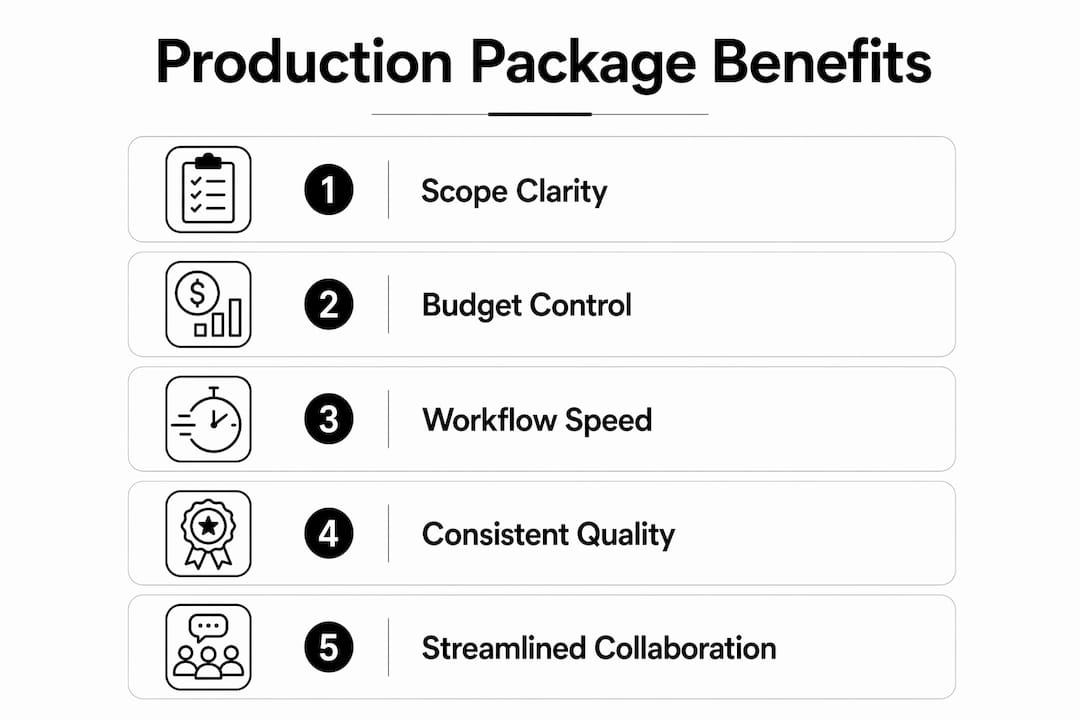
Co-designed studio spaces and workflows amortize setup costs across multiple sessions. A studio that has built its lighting grid, acoustic treatment, and signal chain around a specific type of project can execute that project faster on the fifth booking than on the first. That speed advantage gets passed to the client through faster turnaround and more consistent quality.
The distinction between studio environment types matters here. ASL Productions describes the difference clearly:
“Turnkey studios work best for repeatable, consistent shoots by offering ready-to-go sets and equipment setups. Black box studios offer flexibility for custom builds but require more setup time and creative direction from the client.”
For independent creators producing recurring content, whether that is a podcast series, a monthly single release, or a YouTube show, turnkey environments enable quick starts and consistent output quality. The setup is already done. You walk in, create, and walk out with a finished product.
Here is how packages accelerate studio workflow in practice:
Pre-session alignment: The studio team reviews the package scope before you arrive, so no time is wasted on briefings.
Standardized signal chains: Audio and video setups are pre-tested and documented, reducing technical delays.
Defined handoff points: Mixing, color grading, or mastering begins immediately after recording because the workflow is already mapped.
Recurring session memory: Studios that work with you repeatedly build institutional knowledge of your preferences, cutting setup time further with each booking.
Comparing production package types: what to look for
Not all production packages are built the same way, and choosing the wrong structure can cost you more than going without one. The two primary models are project-based packages and monthly retainers, and they serve very different creative workflows.
Package type | Best for | Key trade-off |
Project-based | One-time releases, film projects, single campaigns | Fixed cost per project; no ongoing commitment |
Monthly retainer | Recurring content, ongoing releases, series production | Predictable monthly spend; requires consistent volume |
Tiered packages | Creators scaling output over time | Flexibility to upgrade; may include upsell pressure |
Full production bundles | Artists wanting end-to-end delivery | Maximum convenience; least control over individual phases |
Nashville Tracks offers a practical example of what a full production bundle includes: two two-hour vocal sessions, session musicians, and a professionally engineered mix. That is a turnkey outcome for an independent artist who wants to focus on performance rather than managing fragmented production inputs.
Before booking any package, verify these specifics:
Stems and raw files: Some packages exclude stems to maintain studio control, which directly limits your remix and monetization options.
Format deliverables: Confirm you receive WAV, MP3, or video formats suited to your distribution platform.
Rights transfer: Clarify when and how ownership of the final assets transfers to you.
Session musician credits: Know whether session players retain any publishing rights on your recordings.
Pro Tip: Request a written deliverables checklist before you pay a deposit. If the studio resists putting specifics in writing, treat that as a red flag about how disputes will be handled later.
Creative control, monetization, and ownership in packaged deals
The financial structure of a production package shapes your long-term monetization options more than most creators realize. Some studios cover upfront production costs but expect backend compensation or an ownership stake in return. This reduces your financial risk at the start of a project, but it directly affects how much you earn from streaming, licensing, or sync deals later.
The core trade-off in packaged studio engagements is between upfront client risk and backend control. Creators must evaluate their monetization goals before selecting a package structure. A package that looks affordable on day one may cost far more in foregone royalties over three years.
Here is what to evaluate before signing:
Master ownership: Do you own the master recording outright, or does the studio retain any interest?
Publishing splits: If session musicians or producers contributed creatively, are publishing splits documented?
Sync licensing rights: Can you license the finished work to film, TV, or advertising without studio approval?
Exclusivity clauses: Does the package restrict you from releasing the work through certain channels or within a certain timeframe?
Understanding audience targeting and financial positioning before you enter a studio deal helps you negotiate from a position of clarity rather than urgency. Creators who know their distribution strategy going in are far better equipped to push back on ownership terms that do not serve their goals.
Practical tips for getting the most from studio production packages
Getting value from a production package requires preparation before you book, not after. The most common mistake independent creators make is treating a package like a product purchase rather than a collaborative agreement.
Request a written scope document that lists every deliverable, revision round, and delivery date before you pay a deposit.
Confirm file format deliverables including whether stems, multitrack sessions, or raw footage are included or available for an additional fee.
Match the package to your volume. A monthly retainer only saves money if you are producing consistently. A project-based package is more cost-effective for one-off releases.
Use turnkey studios for recurring content. If you produce a podcast, a monthly single, or a video series, a studio with a pre-built setup will save you hours per session over time.
Audit the contract for hidden costs such as overtime rates, additional revision fees, or charges for file transfers and storage.
Independent creators should treat packages as mini-contracts that outline scope, deliverables, revisions, and formats. Without that documentation, even the most professional studio relationship can drift into scope creep and resentment.
Pro Tip: Build a one-page production brief before your first session. Include your release timeline, target platforms, and any non-negotiable creative requirements. Studios that receive this document in advance deliver better results and fewer surprises.

Key takeaways
Production packages deliver value because they replace ambiguity with defined scope, fixed pricing, and documented deliverables that protect both the creator and the studio across every phase of a project.
Point | Details |
Scope clarity prevents overruns | Packages with defined deliverables and revision limits stop projects from becoming open-ended engagements. |
Turnkey studios accelerate output | Pre-built environments reduce setup time and deliver consistent quality for recurring content creators. |
Ownership terms shape monetization | Backend stakes and master rights in package contracts directly affect long-term royalty and licensing income. |
Match package type to your workflow | Project-based packages suit one-off releases; retainers work best for creators with consistent monthly output. |
Written documentation is non-negotiable | Always confirm deliverables, formats, and rights in writing before paying a deposit on any studio package. |
What I have learned from working with production packages
The first time I signed a studio package without reading the revision policy, I burned three weeks on a project that should have taken ten days. The package looked clean on paper: a fixed price, a delivery date, and a list of deliverables. What it did not specify was how many rounds of changes were included before additional fees kicked in. By the second revision, I was paying hourly rates that erased the budget advantage the package was supposed to provide.
That experience taught me something most articles on this topic skip entirely. The value of a production package is not the price. It is the conversation the package forces you to have before work begins. When a studio hands you a package proposal, your job is not to accept it. Your job is to interrogate every line until you understand exactly what you are buying and what you are not.
The studios I trust most are the ones that welcome that interrogation. They have built their packages around repeatable workflows, and they can explain every inclusion and exclusion without hesitation. Studios that get defensive about scope questions are usually the ones with the loosest internal processes, and loose processes always cost the client more in the end.
My honest advice: prioritize studios that have worked with creators at your stage before. A studio that packages services for major label artists operates very differently from one that has built its model around independent creators. The package terms, the ownership expectations, and the communication style all reflect who they are actually designed to serve.
— Christopher
How Studiom8 connects you to the right studio packages
Studiom8 is built for independent creators who need studio access, production resources, and collaboration tools without the friction of traditional booking platforms. The Studiom8 subscription model gives you predictable monthly access to recording studios, rehearsal spaces, and production resources, so you can plan your releases and sessions without guessing at costs. For producers and artists who create consistently, that predictability is the difference between a sustainable creative practice and a project-by-project scramble. Studiom8 also connects you with engineers, producers, and collaborators directly through the platform, so your next package deal starts with the right team already in place. Explore what Studiom8 offers and find the plan that fits your production volume.
FAQ
What are production packages in a studio context?
Production packages are bundled studio services with fixed pricing and defined deliverables covering pre-production, production, and post-production phases. They replace line-item negotiation with a clear upfront scope that both the studio and the creator agree to before work begins.
Why do studios prefer offering packages over hourly rates?
Packages allow studios to standardize workflows, reduce setup time, and deliver consistent quality across sessions. They also improve cash flow predictability for the studio and reduce the administrative cost of managing open-ended client relationships.
What should I check before booking a production package?
Confirm the deliverables list, revision rounds, file formats, ownership of masters and stems, and any exclusivity clauses before signing. Packages without these specifics in writing carry a high risk of scope creep and unexpected fees.
Are production packages worth it for independent artists?
Yes, when the package scope matches your actual production needs. Full production bundles like those offered by Nashville Tracks simplify coordination for artists who want to focus on performance rather than managing individual production inputs.
How do production packages affect my ownership rights?
Some studios include backend or ownership stakes in exchange for covering upfront production costs. Always clarify master ownership, publishing splits, and sync licensing rights in the contract before committing to any packaged studio deal.
Recommended
Comments