

Build Your Dance Brand Outside Social Media
- Sasha Bursak

- Jun 5
- 8 min read
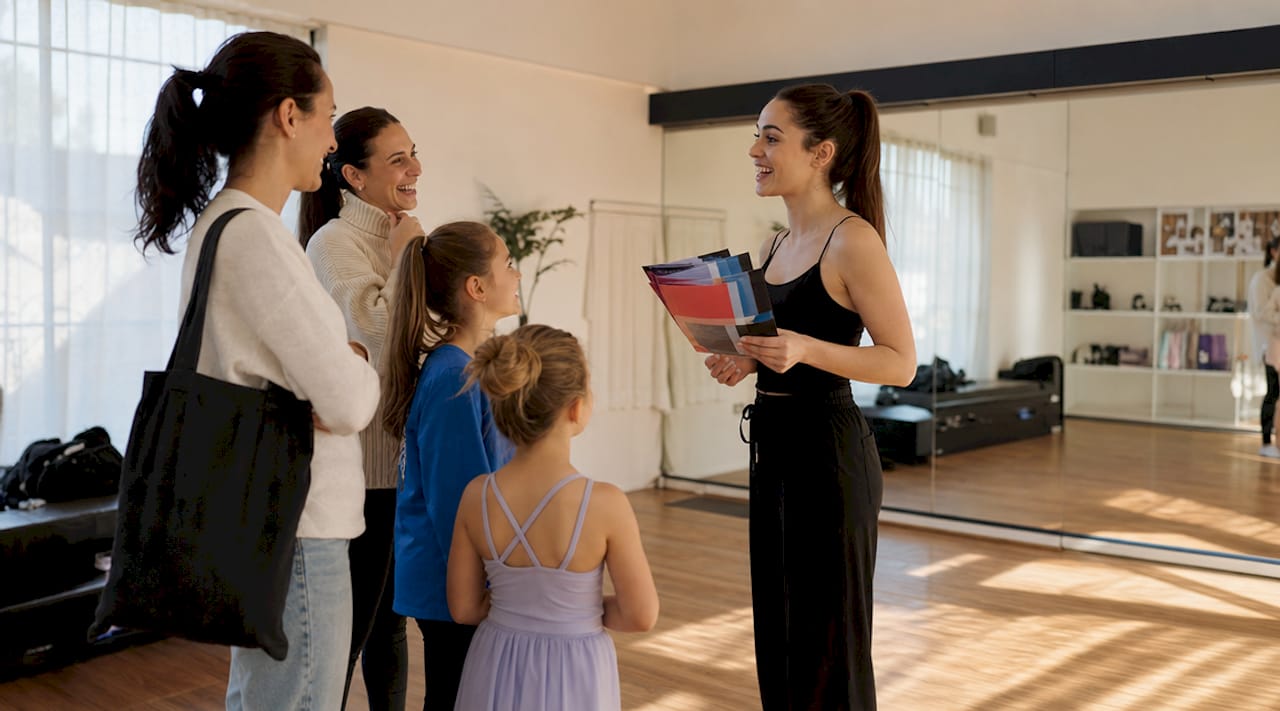
Building a dance brand outside social media is defined as the practice of growing your reputation, enrollment, and community through offline channels and alternative digital tools that you control completely. Independent dancers and choreographers who rely solely on Instagram or TikTok hand their audience to an algorithm they cannot predict or own. The methods covered here, from printed materials with QR codes to structured referral programs, local micro-events, and email newsletters, give you direct access to the people most likely to become loyal students, collaborators, and paying clients.
What offline marketing tools are essential for promoting a dance brand?
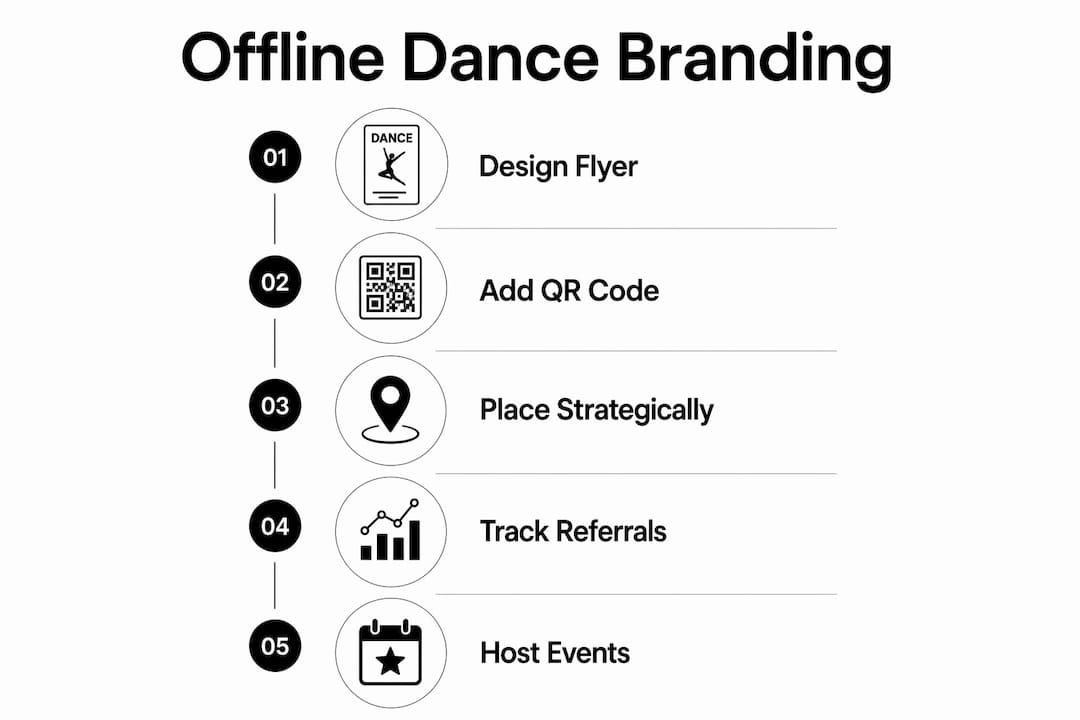
Printed flyers and posters remain the most underrated tools in a dancer’s marketing kit. Printed materials are effective first touchpoints for families who are not active online, particularly for seasonal programs. That matters because your most committed students often come from exactly that demographic: parents who make decisions based on what they see at the library, the community center, or the school pickup line.
Every print piece you create must function as a conversion pathway, not just an information sheet. Your flyer needs studio branding, a program overview, age ranges, schedule, and a clear call to action. Vague flyers get glanced at and recycled. Specific flyers with a single next step get acted on.
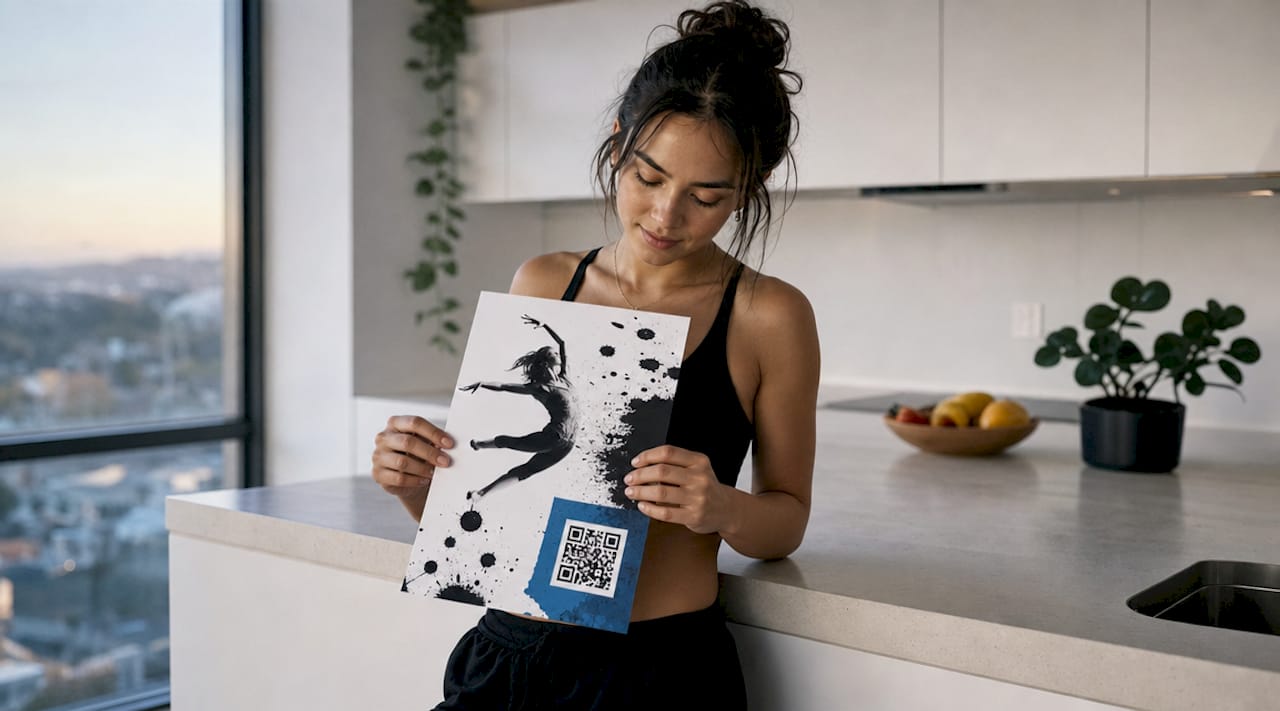
The single upgrade that turns a passive flyer into a measurable campaign is a QR code. Adding a QR code that links directly to a registration page reduces friction and lets you track how many people responded to each placement. Tools like Canva handle QR code generation for free, and Bitly lets you create trackable short links so you know which location or batch of flyers drove the most sign-ups.
Placement strategy matters as much as design. The highest-converting locations are places where families are actively making decisions about activities: libraries, community centers, pediatric waiting rooms, and school bulletin boards. Timing your placements around seasonal enrollment windows, such as back-to-school in August or the January fresh-start period, raises your conversion rate significantly because you are meeting people at the moment they are already thinking about signing up for something.
Pro Tip: Create two versions of every flyer: one for high-traffic public spaces with a bold headline and minimal text, and one for partner business counters with slightly more detail. Track each with a separate Bitly link so you know which format performs better.
Here is a quick comparison of print formats and their best use cases:
Format | Best placement | Primary goal |
Single-sheet flyer | Libraries, schools, community centers | Drive QR scans and registrations |
Folded brochure | Studio reception, partner businesses | Explain programs in detail |
Postcard | Direct mail, event handouts | Seasonal promotion or referral offer |
Printed program | Recitals and performances | Enrollment follow-up with trial offer |
How can referral programs and word-of-mouth grow your dance brand offline?
A referral program is the most cost-effective enrollment tool available to an independent choreographer, and most dancers never build one with any structure. A structured offline referral program using physical referral cards, consistent staff engagement, and timely follow-up converts more families reliably than any single social media post. The reason is simple: a personal recommendation from a trusted friend removes every objection before the conversation even starts.
Here is how to build a referral system that actually runs:
Design a physical referral card. Print cards with the referring family’s name or a unique code, your studio name, and a clear offer for both parties. Keep it wallet-sized so people actually carry it.
Train every staff member to mention it. Referrals die when only the owner remembers to ask. Build the ask into check-in scripts, end-of-class conversations, and any parent communication.
Offer incentives that feel meaningful. Tuition credits and free trial classes are the two most effective rewards. Cash discounts feel transactional; credits toward something they already value feel generous.
Follow up within 48 hours. Timely follow-up after a referred student’s first class is the single biggest lever for conversion. A personal call or handwritten note at that moment turns a trial visit into a committed enrollment.
Run seasonal pushes. Tie referral campaigns to your enrollment calendar. A “bring a friend” push in September and January, when families are already thinking about activities, outperforms a year-round passive program.
Performances are a natural referral trigger that most choreographers ignore. Printed programs at recitals with welcome letters and referral inserts, combined with post-show follow-up emails, multiply enrollment impact without any social media required. Every audience member at a recital is a warm lead. Give them a physical card with a trial offer and a QR code, and you have turned a performance into a pipeline.
Pro Tip: Track referrals in a simple spreadsheet: referring family, referred contact, date of first class, and outcome. You do not need complex software. Visibility into the data is what lets you improve the system over time.
What role do in-person events and local partnerships play in offline dance brand building?
Regular micro-events and pop-ups are the engine of a local-first microbrand strategy. A recommended cadence is six to eight two-hour pop-ups per quarter, combined with a membership funnel that converts attendees into recurring students. That frequency creates the kind of repeated exposure that builds genuine brand recognition in a neighborhood without a single social media post.
Local business partnerships extend your reach at near-zero cost. Cross-promotion with dancewear shops, cafés, and community organizations enhances credibility and puts your brand in front of audiences who are already engaged with local culture. A co-hosted event with a dancewear retailer, for example, draws their existing customers into your orbit and gives both parties a reason to promote the event through their own channels.
Here is what a sustainable offline event calendar looks like in practice:
Monthly open classes or workshops at a community center or rented studio space, priced low enough to attract first-timers
Quarterly showcase performances that double as enrollment events, with branded programs and trial class inserts
Seasonal merchandise drops tied to event dates, creating urgency and a collectible brand artifact
Loyalty punch cards that reward consistent attendance and reduce churn among existing students
The operational side of this is where most independent dancers fall short. Successful local-first microbrands operate with clear workflows: defined roles, scheduled dates booked months in advance, permit requirements handled early, and a technical setup checklist for each event type. Treating your brand like a business with repeatable systems is what separates choreographers who grow steadily from those who burn out after a few months of sporadic effort.
Event type | Frequency | Primary outcome |
Community open class | Monthly | New student acquisition |
Recital or showcase | Quarterly | Referral and enrollment momentum |
Partner co-event | Bi-monthly | Brand credibility and reach |
Merch drop | Seasonal | Revenue and brand loyalty |
Which digital tools and alternative platforms support dance brand growth without traditional social media?
The most controllable digital channel you own is your email list. An email newsletter gives you direct, repeatable contact with your audience without any algorithm deciding who sees your message. Platforms like Mailchimp and ConvertKit let you segment your list by student type, send enrollment reminders tied to your offline calendar, and track open rates so you know what content resonates.
Beyond email, several alternative platforms support dance brand identity development without the noise of traditional social media:
YouTube works as a long-form brand storytelling channel. Tutorial videos, behind-the-scenes rehearsal footage, and performance recordings build searchable, evergreen content that attracts students months or years after you post it.
Podcasts position you as a thought leader in your dance niche. A short-form audio series on choreography, audition prep, or the business of dance reaches an audience that is actively seeking expertise.
Niche creative marketplaces like Studiom8 connect you with rehearsal spaces, collaborators, and other creative professionals in a context designed for creators rather than content consumption.
QR codes are the critical link between your offline materials and your digital tools. A flyer with a QR code creates momentum by linking directly to a registration form or landing page, while a flyer alone only creates awareness. Use Bitly to create trackable links for each campaign so your offline and digital data connect cleanly.
Pro Tip: Build a dedicated landing page for each offline campaign rather than sending QR scans to your homepage. A page that matches the flyer’s offer and message converts significantly better because the visitor’s expectation is met the moment they arrive.
Key takeaways
Building a dance brand outside social media works because offline relationships, repeatable systems, and direct digital channels create enrollment and loyalty that no algorithm can take away.
Point | Details |
Print materials as conversion tools | Every flyer needs a QR code linking to a registration page, not just contact information. |
Referral programs need structure | Physical cards, staff training, and 48-hour follow-up are the three non-negotiable components. |
Micro-events drive repeat engagement | Six to eight pop-ups per quarter combined with a membership funnel builds sustainable local brand recognition. |
Local partnerships multiply reach | Dancewear shops, cafés, and community organizations extend your audience at minimal cost. |
Email beats social for retention | A newsletter list you own outperforms any social platform for consistent, algorithm-free communication. |
Why offline-first branding is the smartest move independent dancers can make right now
I have watched choreographers spend years building audiences on platforms that changed their rules overnight. Reach dropped, accounts got restricted, and the work of building that following essentially reset. The dancers who kept their studios full through all of it had one thing in common: they had built real relationships in their physical communities, and those relationships did not depend on any platform’s goodwill.
Alvin Ailey American Dance Theater is the clearest proof that consistent local presence and repeatable brand systems outperform viral moments. Their brand is built on physical performance, community engagement, and a clear identity that exists independent of any feed. That model scales down to a single independent choreographer running classes out of a rented studio.
The practical truth is that offline relationships and community engagement are the primary drivers of sustainable growth for dance instructors. Social media can amplify what you have already built, but it cannot replace the trust that comes from someone watching you teach, handing them a card, and following up with a personal message. The choreographers I respect most treat their brand like a small business with operational processes: a referral system that runs every week, a print calendar that goes out every season, and an event schedule that their community can count on.
Start with one system. Build a referral card, place twenty flyers in the right locations, or commit to one monthly open class. Measure what happens. Then add the next layer. The compounding effect of consistent offline presence is slower than a viral video, but it is permanent.
— Christopher
How Studiom8 supports your offline brand-building efforts
Independent dancers and choreographers need tools that work with their offline systems, not against them. Studiom8 is built for exactly that.
Studiom8 connects you with rehearsal spaces, collaborators, and creative professionals while giving you the tools to manage memberships, referral tracking, and enrollments without the pressure of competing on a social feed. The platform’s ambassador program tools let you formalize your word-of-mouth referral system with trackable links and incentive management, and the subscription features support the membership funnels that turn one-time event attendees into recurring students. If you are serious about growing your dance reputation outside social media, Studiom8 gives you the operational backbone to make it work.
FAQ
What is the most effective offline tool for promoting a dance brand?
Printed flyers and posters placed in libraries, community centers, and schools during seasonal enrollment windows are the highest-converting offline tools. Adding a QR code that links directly to a registration page turns awareness into sign-ups.
How do I structure a referral program without social media?
Design a physical referral card with a unique code, train staff to mention it consistently, and follow up with referred students within 48 hours of their first class. Tuition credits and free trial classes are the most effective incentives.
How often should I run local events to build my dance community?
A cadence of six to eight two-hour pop-ups or open classes per quarter, combined with a membership funnel, creates the repeat exposure needed to build genuine local brand recognition.
Can email newsletters replace social media for dance brand communication?
Email newsletters give you direct, algorithm-free contact with your audience and outperform social platforms for retention and enrollment reminders. Platforms like Mailchimp and ConvertKit make segmentation and tracking straightforward for independent creators.
Do I need a website to build a dance brand offline?
A simple landing page is more important than a full website. Each offline campaign, whether a flyer or a referral card, should link to a dedicated page that matches the offer and removes friction from the enrollment decision.
Recommended
Comments